Unstacking a Problem
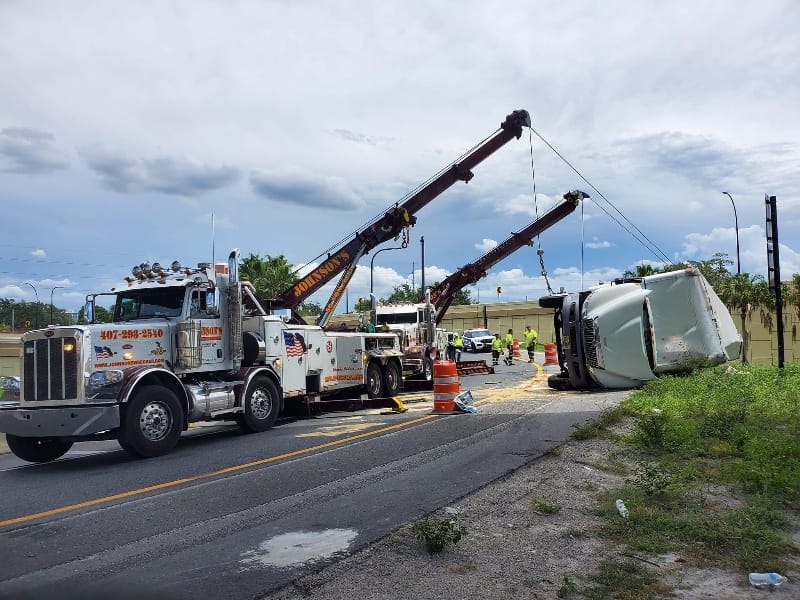
A car carrier makes efficient use of space by stacking vehicles across multiple levels. That works well until the carrier rolls over, jackknifes, or suffers enough collision damage to disturb the load. Then we are no longer looking at only a tractor and trailer. Several individual cars can become part of the problem at once. When or I-4 heavy towing service is needed in those cases, we have to consider many variables: the truck, carrier structure, and vehicles aboard before deciding what should move first. It’s complicated.
The Carrier Is Part Trailer, Part Loading System
Unlike freight enclosed inside a box trailer, cars ride on exposed decks that can be raised, lowered, and positioned around the load. A transported vehicle may be secured at an angle, elevated above another car, or positioned partly over the tractor.
After a wreck, those decks may no longer sit where they normally would. Bent framework or damaged loading mechanisms can make cars difficult to access. When we assess the carrier, we have to consider what the structure is doing as well as the condition of the cars.
Before We Move the Carrier, What Happens to the Cars?
There are two broad possibilities. The vehicles remain aboard during recovery, or some need to come off first.
Neither choice is automatically simpler. Leaving them aboard means their combined weight and position remain part of the recovery. Unloading them gives us several individual vehicles that now have to be removed, staged, and transported.
Unloading Is Not Always as Simple as Driving Them Off
A car that looks undamaged may not be ready to roll down a damaged carrier deck. Its tires, suspension, steering, or bodywork may have been affected. The ramps or decks may also be unusable.
We may need to answer questions such as:
- Which cars are still securely attached?
- Can the decks still move?
- Can each car roll and steer?
- Is damaged framework blocking access?
- Where can we stage removed vehicles?
- How will those vehicles leave afterward?
The answers can differ from one position on the carrier to the next.
One Car Comes Off, and Our Recovery Changes
Removing vehicles changes more than the amount of space available. It changes weight distribution.
During heavy-duty recovery near I-4, we have to work with the carrier as it exists at each stage. Removing an upper vehicle changes the load differently from removing a car positioned lower or farther back.
If the carrier is on its side or resting at an unusual angle, unloading and recovering the truck become connected parts of the same operation.
Several Cars May Need Several Rides
Cars removed from the carrier still need somewhere to go. With vehicle recovery along I-4, we may be dealing with damaged cars that require towing alongside operable vehicles that simply need continued transportation.
We also still have the original tractor and carrier to address. During tractor-trailer recovery around I-4, getting the largest piece of equipment upright does not automatically finish the job.
Upright Does Not Mean Finished
Once the carrier is back on its wheels, we still have to consider its condition. Axle, suspension, tire, deck, or tractor damage may prevent normal travel, meaning heavy truck towing near I-4 can still be necessary.
Meanwhile, every car we unloaded has to be accounted for. Clearing a loaded carrier wreck means finding an appropriate next move for the tractor, carrier, and transported vehicles.
Johnson’s Wrecker Service Handles Your I-4 Recovery
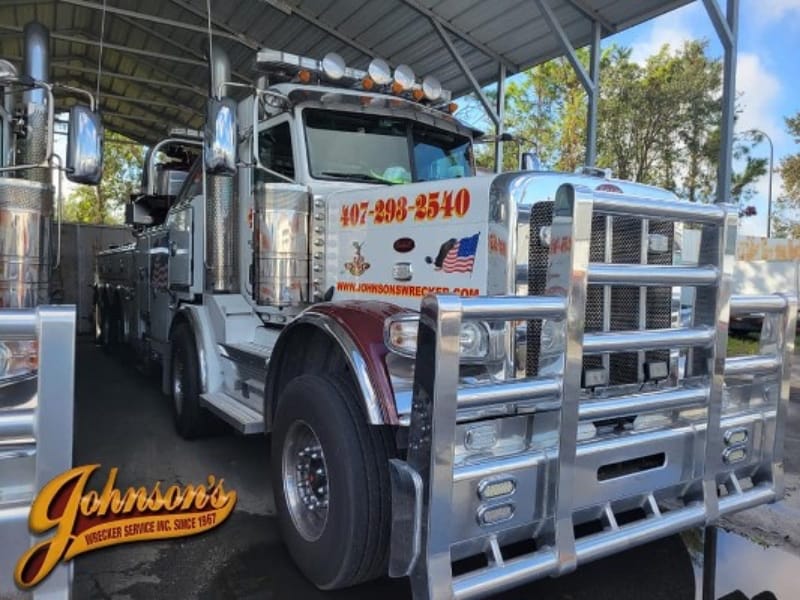
At Johnson’s Wrecker Service, we have remained family-owned and operated since 1967, giving us decades of experience in towing, transport, and recovery. As Orlando’s largest and oldest wrecker service, we have built our reputation around dependable service and the capability to handle demanding recovery work. When customers need I-4 heavy towing, they are calling a company that has been serving the Orlando area and working in the towing and recovery industry for nearly six decades.
FAQs
Why are loaded car carriers difficult to recover after a crash?
They combine a large commercial truck with several individually secured vehicles on multiple decks. Damage to the carrier can affect the position and accessibility of every car aboard.
Do transported cars always have to be unloaded after a rollover?
No. Whether they remain aboard depends on the carrier’s condition, the position of the load, and how the recovery needs to proceed.
Can cars be driven off a damaged carrier?
Sometimes, but only if the cars and the carrier’s loading system are in suitable condition. Collision damage can prevent normal unloading.
What happens to cars removed during recovery?
They may be staged away from the main work area before transportation is arranged. Damaged vehicles may require separate towing.
Why does changing weight matter?
Every car removed changes the total weight and its distribution across the carrier. We have to account for those changes as the recovery progresses.
Is the job finished once the carrier is upright?
Not necessarily. The carrier may still be unable to travel, while cars removed from it also need transportation.