Pump it Up
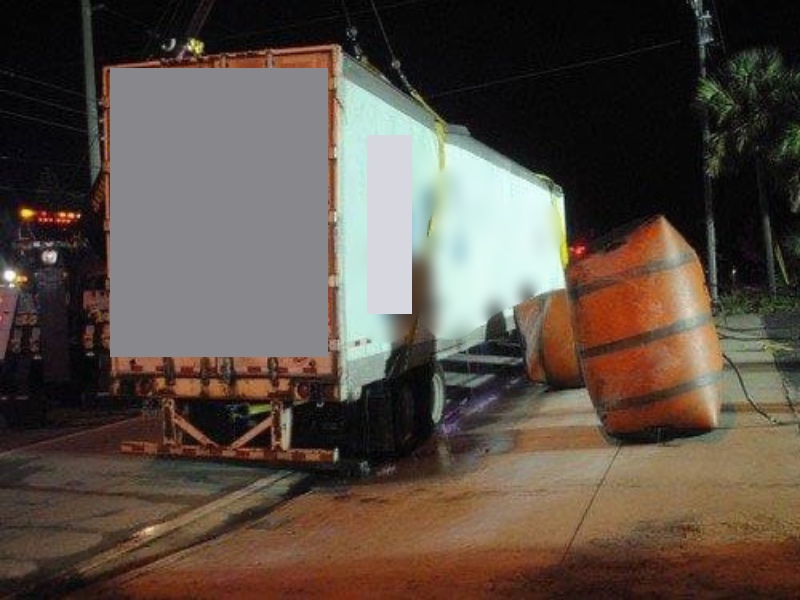
An overturned tractor-trailer. It looks disastrous. The heavy trailer leaves its entire side pressed against pavement or uneven ground. Its panels may already be bent, and pulling hard on the wrong spot could tear them further. For Orlando truck recovery, our air cushions offer another way to start lifting a heavy trailer when the circumstances allow.
The idea sounds simple: get air underneath the weight and raise it gradually. The actual recovery demands more thought because the trailer’s balance changes as it moves. With every pump.
Why Not Just Pull It With a Wrecker?
A rolled-over vehicle doesn’t always give us a strong place to pull from. And that can be a real challenge for our operators. That’s because a trailer’s broad side can be weaker than its frame, especially after a collision. Concentrating force on damaged panels may bend or tear them.
Air recovery cushions are large reinforced bags that expand when filled with compressed air. Instead of pushing on a small area, they spread lifting pressure across more of the trailer’s body. That’s useful when the cargo or trailer structure needs particular care.
The cushions don’t make an unstable load harmless. We still have to manage what happens as it rises.
It’s a Lift, Not a Balloon Ride
Before inflation, we need to understand the trailer’s position. Is part of it on a slope? Can the ground support the setup? What happened to the freight inside?
When cushions suit the situation, they’re positioned against appropriate areas of the overturned equipment and inflated through a controlled air supply. As they expand, they raise the trailer. Winches and rigging can work alongside the cushions to control the movement.
We aren’t trying to fill the bags as fast as possible. We need to watch how the trailer responds as its weight moves back toward the wheels.
The Moment the Weight Shifts
At the beginning of a lift, the trailer may resist movement. Later, as its center of gravity shifts, it may begin to roll much more readily.
We have to control that change, not simply produce enough force to lift the trailer. Air pressure raises the body, but doesn’t stop it from moving unexpectedly. Stabilization and winch lines still matter.
Upright Doesn’t Mean Ready to Drive!
Once the wheels are beneath it again, we don’t assume the trailer can go straight back to work. Axles, suspension, tires, the trailer body, and the tractor may all need inspection. Heavy-duty truck recovery near Orlando may end with a separate tow if the equipment can’t travel normally.
The Cargo Has Its Own Say
During overturned truck recovery in Orlando, we want to know where the weight has settled, especially when freight has shifted against one wall. An empty trailer and a loaded trailer can react differently as they’re raised.
We look at several things before selecting a method:
- Cargo weight: How much weight needs to be raised?
- Load position: Has anything shifted against the side?
- Trailer condition: Which surfaces can tolerate lifting pressure?
- Ground support: Will the setup stay stable?
- Working room: Is there space to finish the upright?
Some incidents call for cargo handling or coordination with other responders before lifting. With Orlando heavy truck recovery, the method has to fit the load and its surroundings.
Air Isn’t Always the Answer
Badly damaged walls, unstable freight, or limited access may make another recovery method more suitable. Air cushions are useful tools, not an automatic solution.
When evaluating air cushion truck recovery around Orlando, we don’t choose the method just because it sounds gentler. We need the truck controlled through the entire movement, and that may call for several techniques.
Orlando Truck Recovery: Johnson’s Wrecker Service Gets it Right
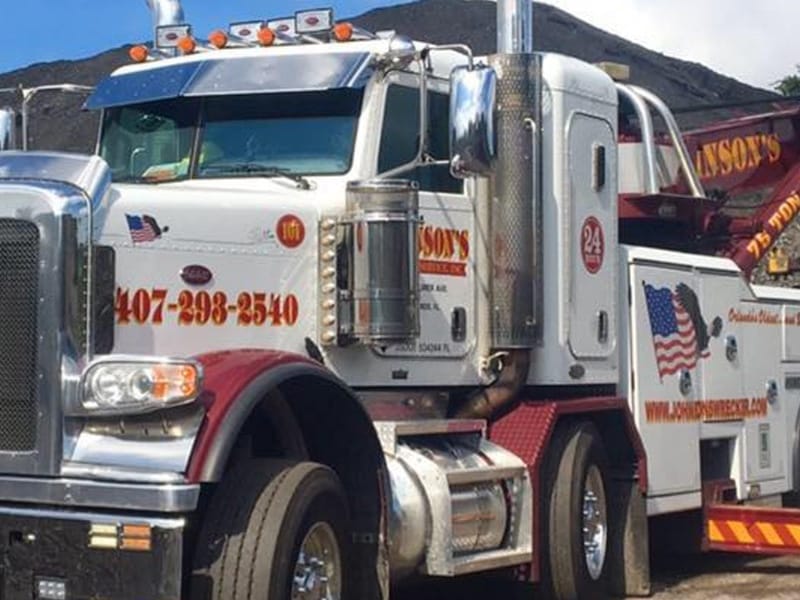
Johnson’s Wrecker Service has been family-owned and operated since 1967. We’re proud to be Orlando’s oldest and largest wrecker service, helping customers with towing, transportation, and recovery.
Our president, Darrell Johnson Sr., was one of the seven original founders of the Professional Wrecker Operations of Florida in 1971. That long involvement in the industry is part of how we think about the work: our people and equipment need to be ready for demanding situations.
When an overturned truck needs lifting, we look at the condition of the equipment and what will actually work at the scene. With heavy truck towing and recovery in Orlando, we plan around the truck’s damage, cargo, and position rather than assuming every rollover needs the same solution.
Frequently Asked Questions
What is air cushion recovery?
Air cushion recovery uses large inflatable bags to help raise overturned trucks and trailers. Compressed air expands the cushions, applying lifting pressure across a broad surface.
Why use air cushions instead of pulling with a wrecker?
Air cushions spread lifting force over a larger area, which can help reduce concentrated pressure on trailer panels. Recovery wreckers and winches may still be needed to control the movement.
Can air cushions upright a loaded tractor-trailer?
They can be used in some loaded-trailer recoveries. The weight, cargo distribution, and condition of the trailer must be assessed before lifting.
Do air cushions prevent damage to the trailer?
Not necessarily. They can reduce concentrated lifting pressure, but an already damaged trailer may still suffer additional damage during recovery.
Are air cushions suitable for every truck rollover?
No. The trailer’s condition, remaining cargo, ground conditions, and available space all influence whether cushions are appropriate.
What happens after an overturned trailer is uprighted?
We assess the truck and trailer to determine whether they can be moved normally. Damaged equipment may require heavy-duty towing or another transportation arrangement.